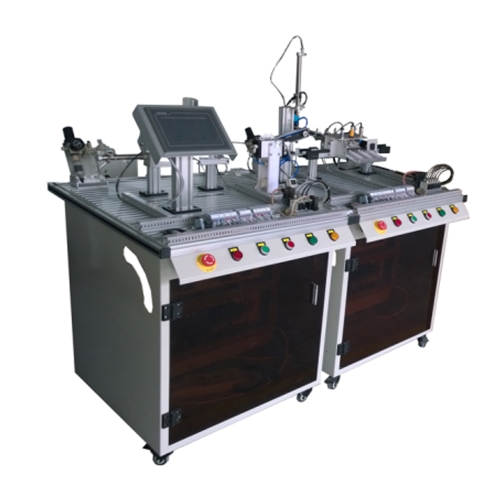
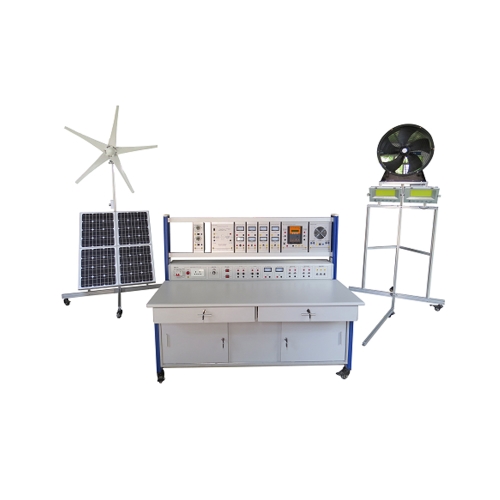
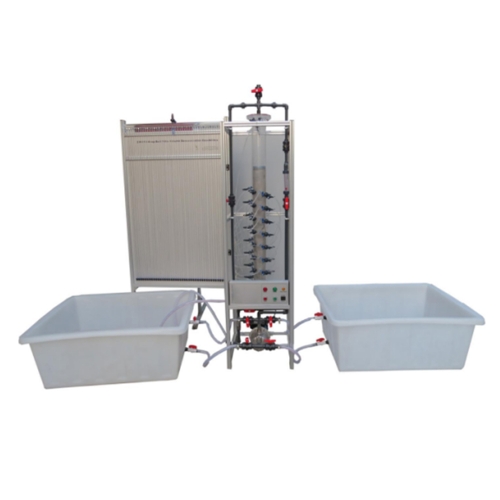
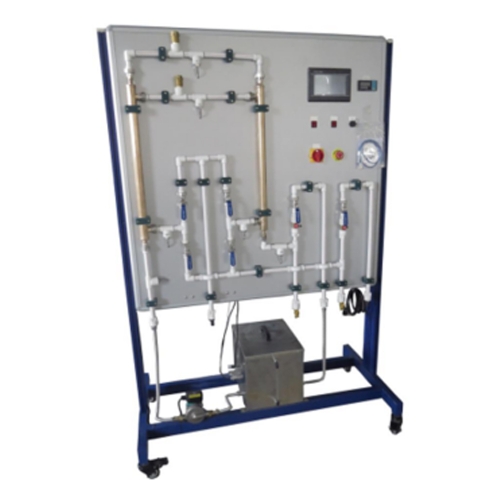
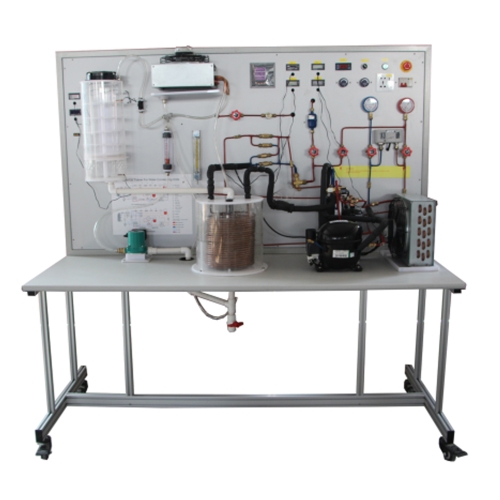
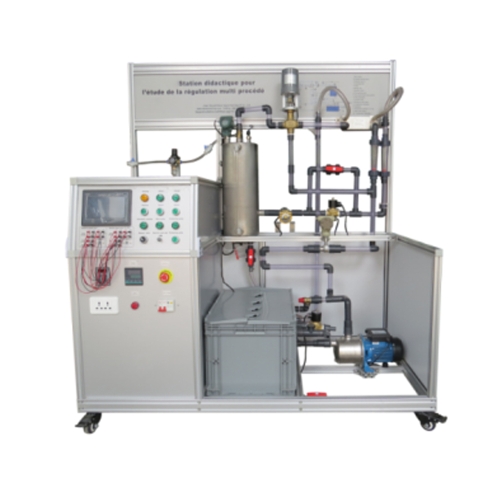
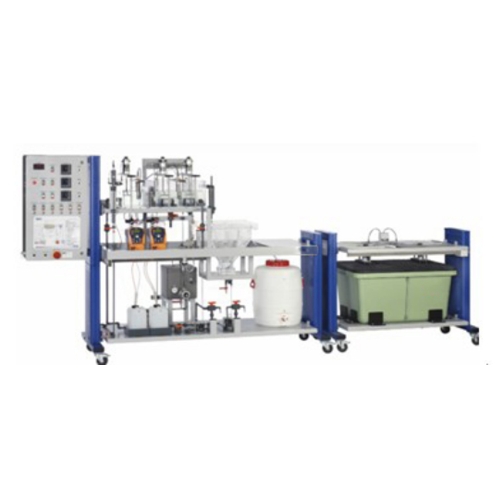
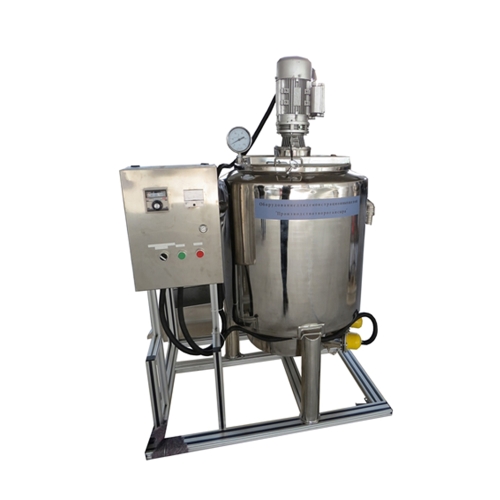
AFM026P Process Control Trainer Didactic Equipment Vocational Training Equipment Process Control Trainer
1. Product Introduction
1.1 Product Description
Process control, short for automatic control of production processes, is an important component of automation technology. It typically refers to production processes in industries such as petroleum, chemical, power, metallurgy, light industry, building materials, and nuclear energy. In modern industrial production, process control technology plays an increasingly important role in achieving optimal technical and economic indicators, improving economic efficiency and labor productivity, improving working conditions, and protecting the ecological environment.
Focusing on the key technologies and equipment systems in process industrial automation and information systems, this project designs advanced comprehensive practical training equipment for process control professional laboratories, establishing a key laboratory engineering training base.
This training unit is rationally designed and highly versatile, meeting the experimental teaching requirements of industrial automation and automatic control courses in colleges and universities, and is also suitable for postgraduate research projects.
1.2 Product Features
1. The training equipment adopts an industrial aluminum profile frame with a transparent structure and an open interface. This system uses desktop installation, offering flexible placement.
2. The product adopts a desktop structure with an aluminum alloy frame design. It features a two-part design: the controlled object and the control system. It can be combined and placed on a workstation or used separately as needed. For example, adding the control system to different analog load enclosures can transform it into a PLC training device, greatly increasing the flexibility of its use.
3. The equipment boasts excellent input/output interface compatibility. The drive unit and PLC control unit are enclosure-type, facilitating easy replacement. It can function as an electronic circuit load or as the execution object of a PLC control system, and can be expanded and upgraded as needed.
2. Technical Specifications
2.1 Basic Technical Parameters
Operating power supply Single-phase three-wire AC220V/50Hz
Ambient temperature -10℃~+40℃
Ambient humidity <85% (25℃)
2.2 Equipment External Parameters
Dimension 1130mm*450mm*880mm
Weight 50kg
3. Product Introduction
3.1 Main Body of Equipment
No. Name Quantity
1 Button Module 1
2 Drive Unit Module 1
3 Temperature Transmitter 1
4 PLC Module 1
5 Power Supply Box 1
6 Pressure Gauge 1
7 Heater 1
8 Level Sensor 1
9 Temperature Gauge 1
10 Pressure Sensor 1
11 Motor 1
12 Float Switch 5
13 Conductivity Meter Sensor 1
14 Temperature sensor 2
15 Vacuum valve 11
16 Rotameter 1
17 Solenoid valve 1
18 Pressure relief valve 2
3.2 Equipment Accessories
No. Name Quantity
1 Blue 4mm electrical safety connection cable 2
2 Red 4mm electrical safety connection cable 2
3 Black 4mm electrical safety connection cable 2
4 Yellow 4mm electrical safety connection cable 2
5 Black 2mm electrical safety connection cable 20
6 Red 2mm electrical safety connection cable 20
7 Blue 2mm electrical safety connection cable 5
8 Black 3mm electrical safety connection cable 2
9 USB flash drive 1
10 Green 2mm electrical safety connection cable 10
11 Yellow 2mm electrical safety connection cable 20
12 Red 3mm electrical safety connection cable 2
13 Network cable 1
3.3 Introduction to HMI Interface
3.3.1 Main Page
No. Function Quantity
1 Language Switch Button 1
2 Open/Close Solenoid Valve 1
3 Current Pressure Tank Pressure Value 1
4 Current Pressure Tank Temperature Value 1
5 Current Pressure Tank Liquid Level Value 1
6 Low Liquid Level Alarm 1
7 Temperature Higher Than Set Temperature Alarm 1
8 Current TDS (Conductivity) Value of Agitator Tank 1
9 Current Temperature Value of Agitator Tank 1
10 Display Current Operating Status of Agitator Motor 1
11 Display Current Liquid Level of Agitator Tank 1
12 Control Agitator Motor Start and Stop 1
13 Manually Set Water Pump Start Level 1
14 Start/Stop Water Pump 1
15 Manually Set Heater Heating Level 1
16 Enter Flow PID Page (see 3.3.2) 1
17 Control Heater Start/Stop 1
18 Enter Level PID Page (see 3.3.3) 1
19 Enter Pressure PID Page (see 3.3.4) 1
20 Enter Temperature PID Page (see 3.3.5) 1
21 Enter TDS Page (see 3.3.6) 1
22 Adjust Proportional Valve Opening Size 1
23 Display Current Flow Rate 1
3.3.2 Flow PID Control Page
No. Function Quantity
1 Current pressure tank pressure value 1
2 Current pressure tank temperature value 1
3 Current pressure tank liquid level value 1
4 Control solenoid valve open or close 1
5 Graph 1
6 Pump start degree 1
7 Display current flow rate 1
8 Proportional valve opening angle 1
9 Return to main page 1
10 Start/stop pump 1
11 Manually set pump start degree 1
12 Reset PID status 1
13 Error reset 1
14 PID start button 1
15 Actual flow rate (blue curve) 1
16 Set flow rate (red curve) 1
17 Proportional valve output degree (black curve) 1
18 PID parameter settings 1
3.3.3 Liquid Level PID Control Page
No. Function Quantity
1 Actual liquid level (blue curve) 1
2 Set liquid level (red curve) 1
3 Pump output level (black curve) 1
3.3.4 Pressure PID Control Page
No. Function Quantity
1 Actual pressure (blue curve) 1
2 Set pressure (red curve) 1
3 Pump output level (black curve) 1
3.3.5 Temperature PID Control Page
No. Function Quantity
1 Heater Output Level 1
2 Start/Stop Heater 1
3 Actual Temperature (Blue Curve) 1
4 Set Temperature (Red Curve) 1
5 Heater Output Level (Black Curve) 1
3.3.6 TDS Control Page
No. Function Quantity
1 Pump output level 1
2 Start/stop pump 1
3 Start/stop agitator motor 1
4 Water level display (experimental water level between H and L) 1
5 Display agitator motor start status 1
6 Display current TDS value 1
7 Display current water temperature 1
4. List of Product Teaching Experiments
(1) Equipment Wiring Experiment
(2) Experiment on Understanding the Composition of Process Control System Mechanisms
(3) Experiment on Operation and Parameter Setting of Adjusting Instruments, Transmitters, etc.
(4) Sensor Calibration Experiment
(5) Flow PID Control Experiment
(6) Liquid Level PID Control Experiment
(7) Pressure PID Control Experiment
(8) Temperature PID Control Experiment
(9) TDS Experiment



 Login
Login  Inquiry List